Overview
Regulatory labeling is a critical part of bringing HP products to market. Regulatory labels provide authorities, customers and partners with information demonstrating compliance with applicable regulations and certifications.
The required content varies by product type and country of sale. Regulatory markings may appear on:
- Product labels
- Product packaging
- User guides
- Electronic labels (where permitted)
Requirements are defined during the product compliance process and may change depending on regulatory requirements in target markets
Typical Information Found on Regulatory Labels
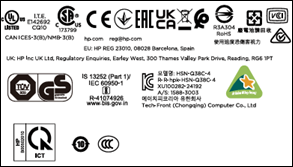
Depending on the product and market, labels may contain:
- Regulatory Model Number (RMN)
- CE marking
- UKCA marking
- Country-specific certification marks
- Safety warnings
- Importer or manufacturer information
- Recycling and environmental markings
- Product identification information
The RMN is a key regulatory identifier and generally appears on both the product regulatory label and packaging.
Example of a product label:
When Is Labeling Determined?
Labeling requirements are evaluated during product development and certification activities.
Before a product is released:
1. Applicable regulations and certifications are identified.
2. Required markings are determined.
3. Labels are reviewed and approved.
4. Labels are incorporated into manufacturing and packaging processes.
In some countries, certification approval must be obtained before certain marks or certificate numbers can be applied.
Why Regulatory Labels Matter
Regulatory labels support:
- Customs clearance
- Product imports
- Market surveillance audits
- Customer compliance requests
- Demonstration of regulatory compliance
Missing or incorrect labeling can result in shipment delays, customs issues, sales restrictions or enforcement actions.
Important Note:
Product labeling requirements vary by country, product category and regulatory domain. Two HP products that appear similar may have different label content depending on their certifications and intended markets.